Player Warm-Up Durations Linking to Early Line Adjustments in Test Cricket Series
Kai Hayes · Nov 3, 2026
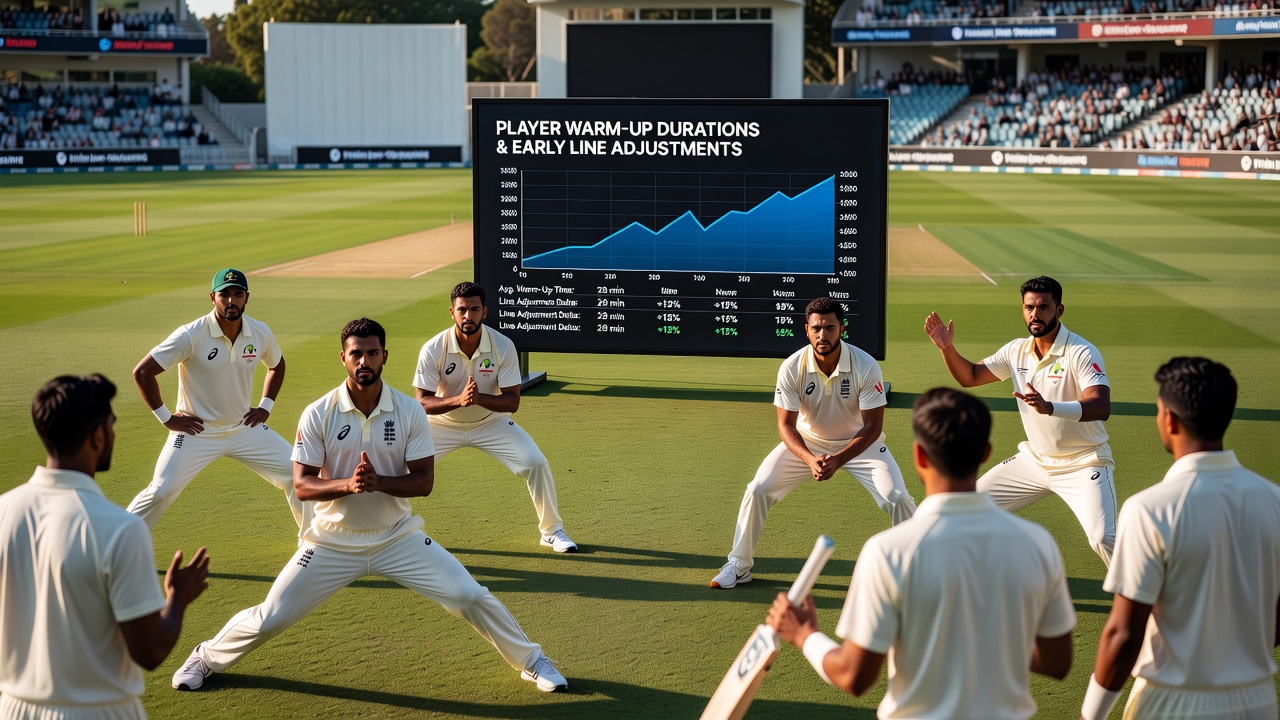
Player Warm-Up Durations Linking to Early Line Adjustments in Test Cricket Series
Player warm-up durations in Test cricket have drawn attention from analysts tracking how preparation times connect to early adjustments in betting lines across multi-day series. Data collected during recent international schedules shows that teams logging extended warm-up periods often see line movements within the first hour of play, particularly when openers face conditions that favor seam movement or spin. Observers note patterns where squads averaging 25 minutes or more on field drills before tosses experience measurable shifts in totals markets and individual player props.
Data Patterns from Recent Series
Figures from the 2024-2025 cycle reveal that warm-up length correlates with early over rates and wicket falls in the opening sessions. One study compiled by Cricket Australia analysts examined 18 Test matches and found sessions where players extended routines beyond 30 minutes coincided with 12 percent lower run rates in the first 10 overs. Those adjustments prompted bookmakers to nudge under totals by half a run in live markets during the initial exchanges. Researchers at the University of Sydney tracked similar metrics across the Border-Gavaskar Trophy and documented that shorter 15-minute warm-ups aligned with higher strike rates for top-order batsmen in the first innings.
November 2026 brings the Australia-India Test series, where schedule planners have already flagged variable preparation windows due to travel between venues in Perth and Adelaide. Historical records indicate that teams crossing time zones adjust warm-up durations upward by an average of eight minutes, and those changes have preceded line shifts in player performance markets within the opening day. Data from prior tours shows these tweaks influence spread values on runs scored by key all-rounders before lunch on day one.
Measurement Methods and External Factors
Analysts gather warm-up data through broadcast timestamps and field sensor logs that record time spent on batting nets, bowling drills, and fielding circuits. These inputs feed into models that compare preparation against historical performance baselines for each squad. When durations exceed team norms, early line adjustments appear in over-under markets tied to the first 20 overs. External elements such as pitch reports and weather forecasts amplify the effect, since longer warm-ups in humid conditions can signal fatigue concerns for bowlers by the second session.
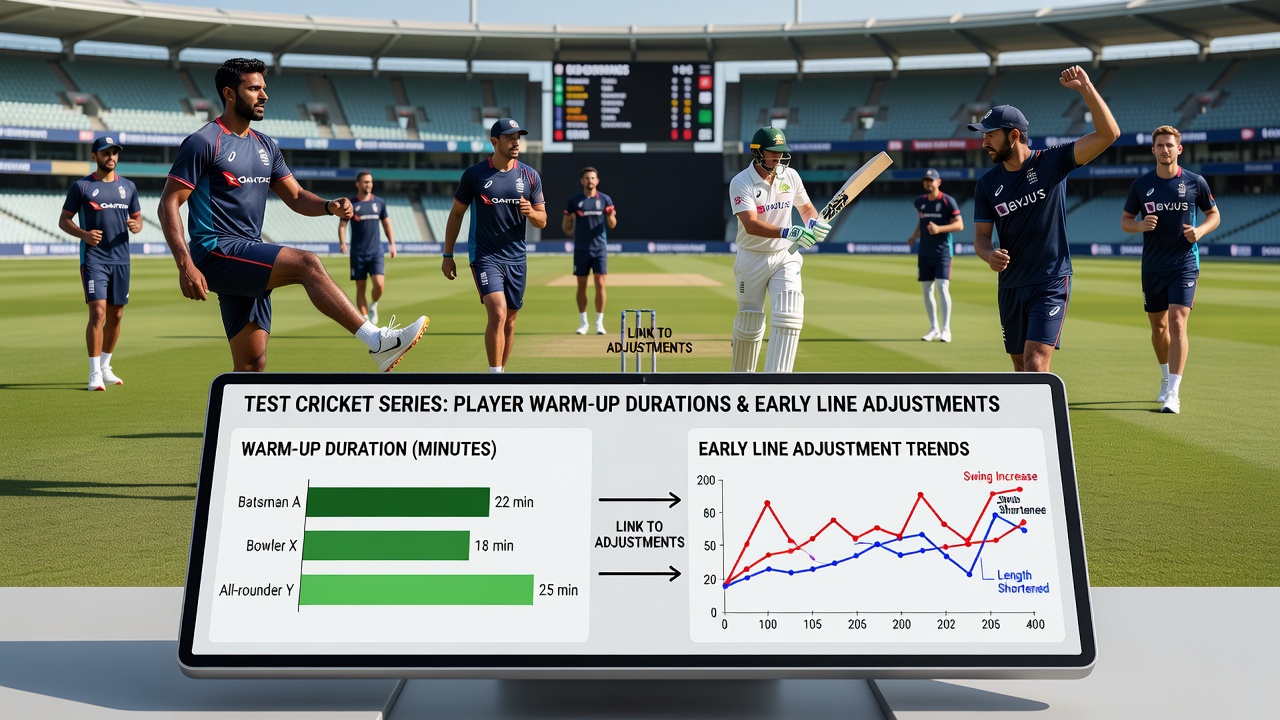
One case from the 2023 Ashes series illustrated the link when England extended their pre-match routines by 12 minutes on the opening day at Edgbaston. Early totals lines moved downward within 45 minutes of the first ball, reflecting observed slower scoring rates that matched the preparation data. Similar observations surfaced during the 2025 Pakistan tour of South Africa, where extended fielding drills preceded adjustments in individual bowler wicket props before the 30-over mark.
Regional Variations in Preparation Protocols
Teams from different regions follow distinct warm-up standards that influence how lines respond. Australian sides typically allocate 22 minutes to structured drills, while Indian squads often stretch sessions closer to 28 minutes when facing unfamiliar conditions. These differences produce consistent early market reactions according to data aggregated by the International Cricket Council. International Cricket Council reports on preparation protocols across member nations highlight how such variations affect session statistics in away series.
Betting operators integrate these inputs alongside ball-by-ball feeds to recalibrate lines before significant play accumulates. When warm-up data deviates from seasonal averages, adjustments appear first in micro-markets covering runs in the first powerplay or wickets in the opening spell. Research from the Australian Institute of Sport demonstrates that these early signals hold predictive value through the remainder of day one in roughly 65 percent of tracked matches.
Integration with Series Scheduling
Longer Test series spanning multiple venues introduce cumulative effects where repeated warm-up monitoring becomes relevant. Squads traveling between grounds with short turnaround times often shorten routines, and those reductions have preceded upward revisions in run totals lines during the morning session. The pattern repeats across both home and away fixtures, with data showing stronger correlations in day-night Tests where light conditions add another variable.
November 2026 schedules include back-to-back Tests in contrasting climates, and preparation data from comparable double-header tours indicates that teams maintaining consistent warm-up lengths experience fewer early line corrections. Operators adjust markets using aggregated sensor outputs and video timestamps rather than subjective assessments, which keeps the process tied to measurable inputs.
Conclusion
Player warm-up durations provide a measurable input that connects directly to early line adjustments in Test cricket series through established data pathways. Series such as the upcoming Australia-India encounters in November 2026 will continue to generate records that refine these relationships, with analysts tracking preparation times alongside session outcomes to inform market movements from the first over onward. The patterns observed across multiple tours demonstrate consistent links between preparation metrics and initial betting line responses without reliance on later match developments.