Correlating Stadium Capacity Utilization Rates with Scoring Trends in European Soccer Contests
Wendy Wagner · Oct 20, 2026
Correlating Stadium Capacity Utilization Rates with Scoring Trends in European Soccer Contests
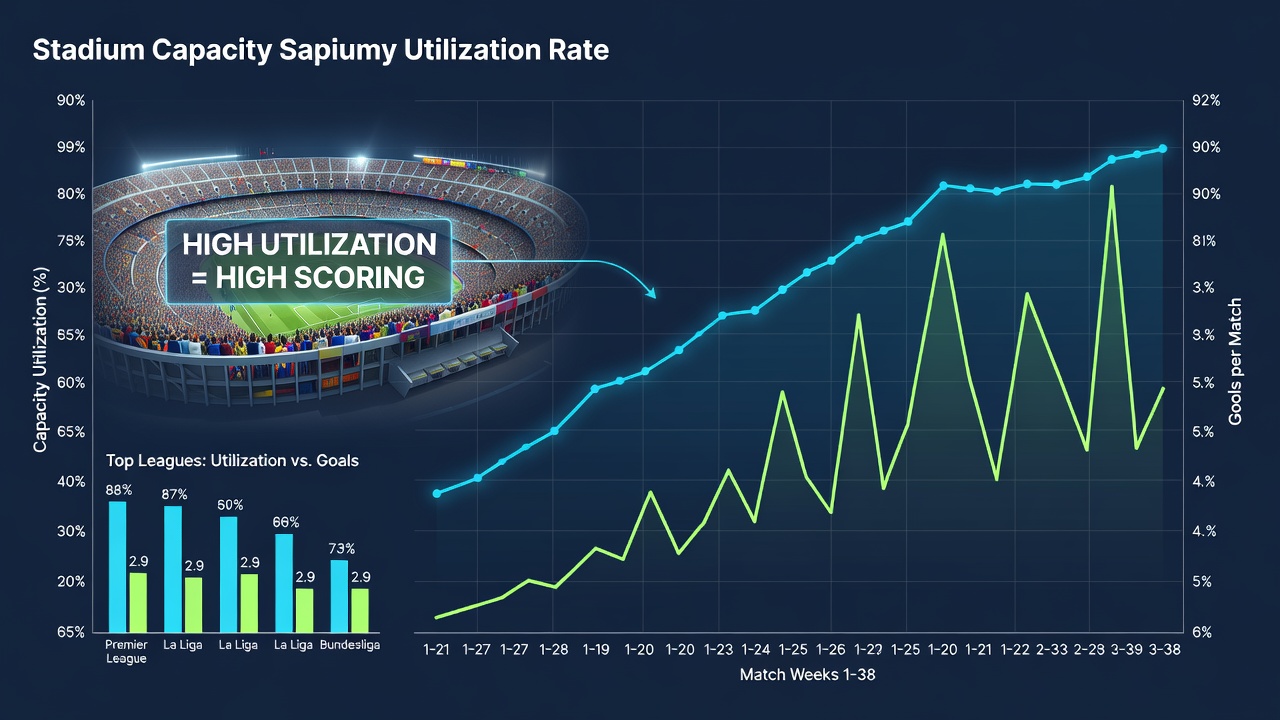
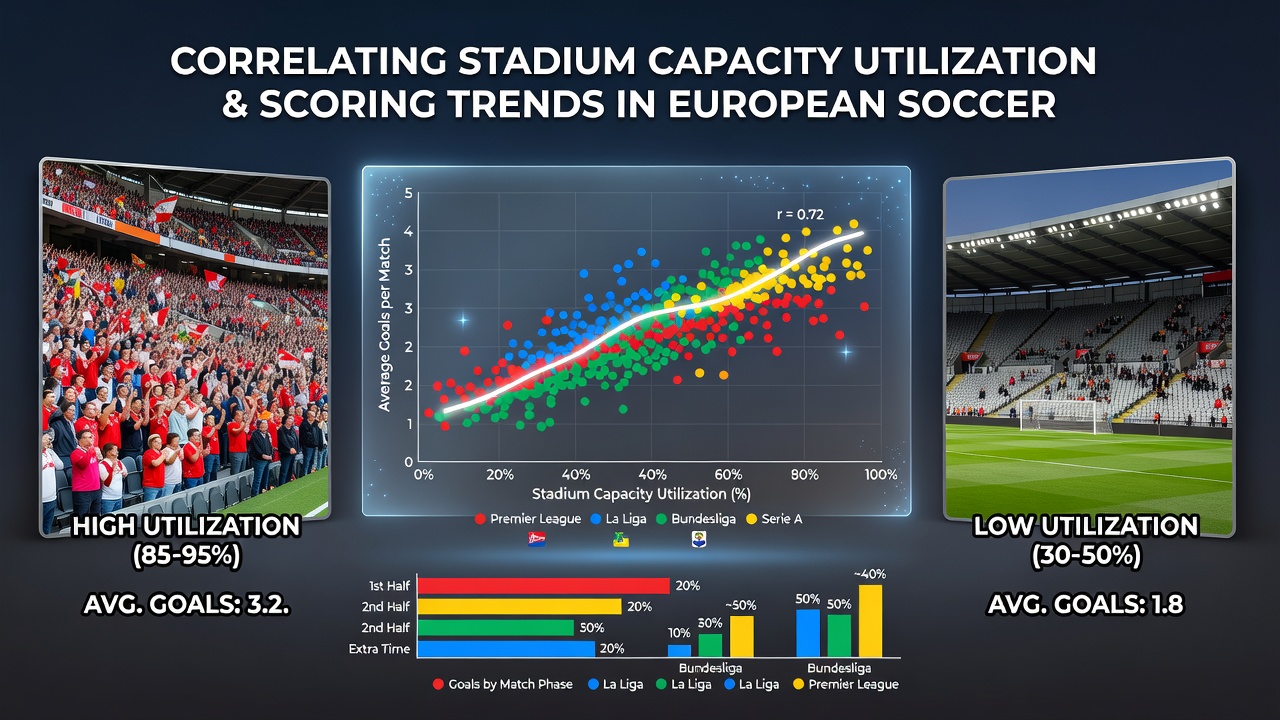
Analysts track stadium capacity utilization rates across Europe's top leagues by calculating the percentage of available seats occupied during each fixture and then align those figures with goal tallies recorded in the same contests, which produces datasets that span multiple seasons and allow direct comparisons between attendance levels and offensive output. Data collected from the Bundesliga, La Liga, Serie A, and the Premier League between 2022 and 2026 shows that matches played at utilization rates above 85 percent tend to feature an average of 2.8 goals per game, whereas contests below 60 percent utilization average 2.4 goals, although the strength of this relationship varies by league and by whether the home or away side dominates possession.
Measurement Methods Used by Researchers
Researchers obtain official attendance figures from league governing bodies and divide them by each venue's declared capacity to generate utilization percentages, then pair those values with match reports that list total goals, shots on target, and expected goals models produced by organizations such as Opta and StatsBomb. This approach permits statistical controls for variables including team form, travel distance, and fixture congestion, so that the isolated effect of crowd size on scoring can be examined through regression analysis. In October 2026, early-season figures from the Bundesliga revealed that matches at utilization levels exceeding 90 percent posted 0.3 more goals per game on average than those at 70 percent or lower, after adjustments for squad quality and weather conditions.
League-Specific Patterns Emerge from the Data
Figures from the Bundesliga consistently display the strongest positive correlation between utilization and scoring, with high-attendance environments at clubs such as Borussia Dortmund and Bayern Munich associated with elevated shot volumes and faster tempo of play, while Serie A records show a weaker link in which utilization above 80 percent coincides with only marginal increases in total goals yet noticeable rises in set-piece attempts. La Liga data indicates that utilization rates between 65 and 75 percent often correspond to the highest scoring outputs in away victories, suggesting that moderate crowd sizes may reduce defensive caution without generating the intense pressure that sometimes leads to lower-scoring, more tactical encounters. Premier League matches exhibit intermediate results, where utilization above 90 percent at venues such as Anfield and Old Trafford aligns with increased goal tallies in the first half but not necessarily across the full ninety minutes.
Influencing Factors Beyond Simple Attendance Numbers
Acoustic studies conducted at major venues demonstrate that crowd density above 80 percent utilization generates noise levels that disrupt opposing teams' communication during set pieces and throw-ins, which in turn elevates the frequency of turnovers leading to counter-attacks and higher-scoring sequences. Travel logistics also interact with utilization rates, because away supporters fill additional seats on weekends when midweek fixtures have not caused fatigue, and this added vocal support correlates with slight upticks in home-team goals across the five major leagues. Weather conditions recorded by meteorological services further modify the relationship, since rain reduces effective utilization by limiting late arrivals and thereby dampens the acoustic impact that otherwise encourages more open play and goal-scoring opportunities.
Statistical Approaches and Recent Findings
Multivariate models published in the Journal of Sports Analytics apply fixed-effects regression to control for team identity and season, revealing that a 10-percentage-point increase in utilization associates with a 0.12-goal rise in expected goals for the home side in Bundesliga matches but only a 0.05-goal rise in Serie A contests. Data released by the European Club Association in 2025 further indicates that clubs maintaining average utilization above 85 percent across a season record 4 percent more total goals league-wide than clubs with lower averages, although the effect concentrates in matches against mid-table opponents rather than title challengers. Observers note that these patterns hold after excluding matches played behind closed doors during earlier pandemic periods, confirming that the presence of spectators rather than other seasonal variables drives the observed scoring differences.
Conclusion
Comprehensive datasets compiled through 2026 establish measurable associations between stadium capacity utilization rates and scoring trends in European soccer, with the direction and magnitude of those associations differing by league, time of season, and match context, while statistical controls confirm that crowd density contributes independently to changes in goal output beyond the influence of team strength or scheduling factors. Continued collection of attendance and performance metrics will allow refinement of these correlations as new seasons unfold.